
“There is not enough bone for an implant in your case.” For many patients, that one sentence ends the idea before it has properly begun. Yet it is rarely a no – usually it is the start of a plan. Bone grafting in the jaw, known clinically as augmentation, is now among the most dependable procedures in implantology. This guide explains why bone is lost in the first place, which techniques exist, what they mean in everyday terms – and in which cases grafting can be avoided.
Why bone goes missing
Jawbone is not a rigid foundation but living tissue that adapts to the load placed on it. With every chewing motion a tooth transmits pressure through its root into the bone, and that stimulus is what keeps the bone stable. Remove the tooth and the stimulus goes with it – so the body breaks down what it no longer needs.
This loss begins immediately and is rapid at first: in the first year after an extraction, roughly a quarter of the bone width is typically lost, more slowly after that, but steadily. Someone who has lived for ten years with a gap or a poorly fitting denture often has too little bone not because something went wrong, but because the body responded entirely normally.
Other common causes are treated periodontitis that has broken down bone along the roots, larger cysts, full dentures worn for many years and – in the posterior upper jaw – a maxillary sinus that has expanded downwards.
Why this matters for an implant
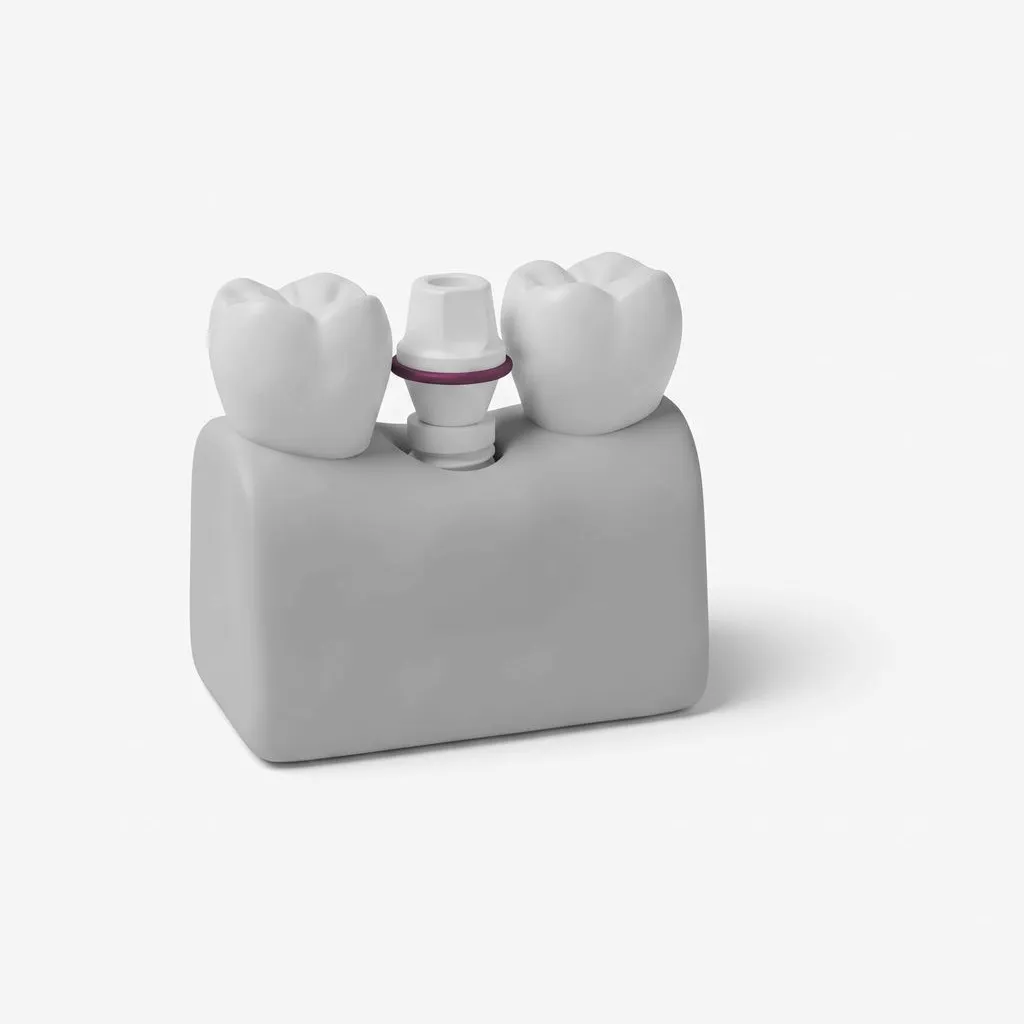
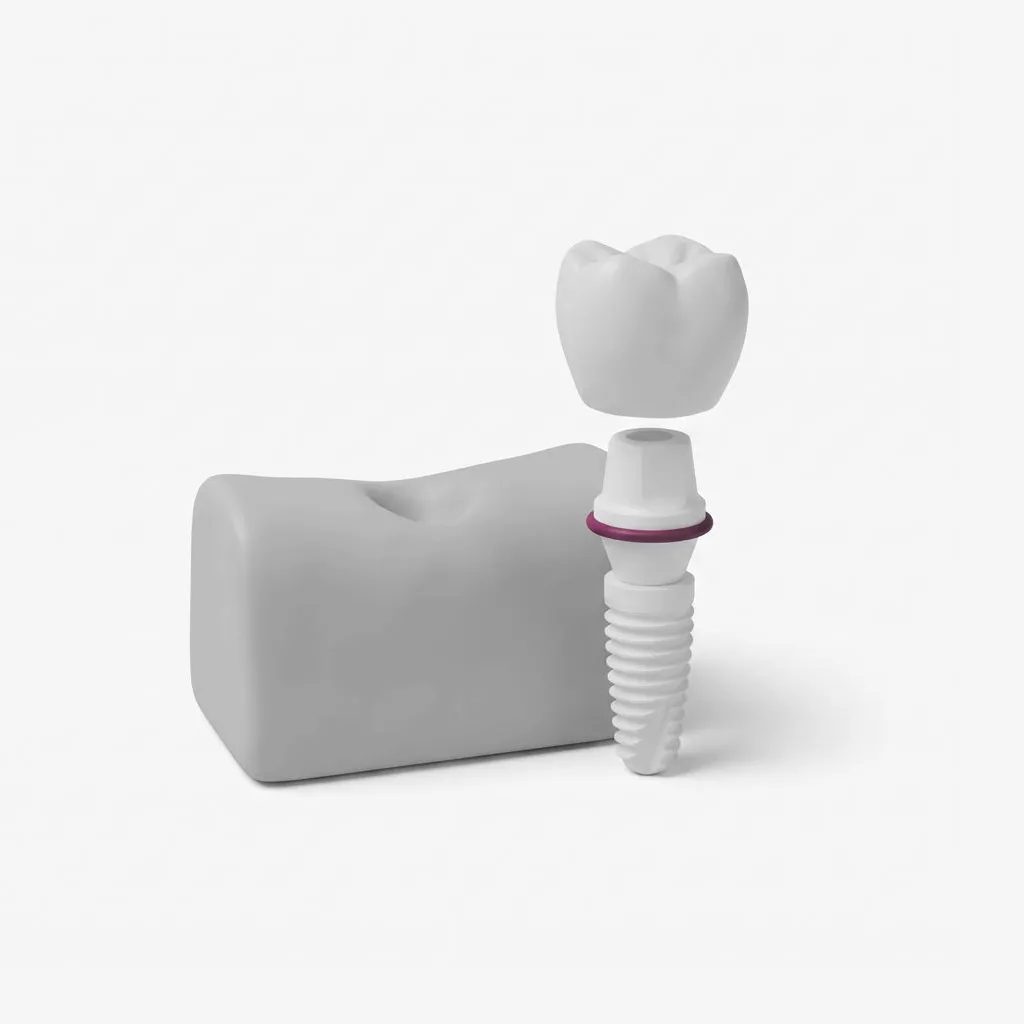
An implant needs bone in three directions: enough height, enough width and sufficient substance all around it. As a guide, a wall of roughly 1 to 2 millimetres of healthy bone around the entire implant is the aim. Without it, the problem is not the hold on day one – the implant does sit firmly at first – but stability over the years, and aesthetics: if bone that is too thin recedes, the gum margin can follow and the neck of the implant become visible.
That is precisely why grafting is not an optional extra to be saved on, but the condition for a result that lasts.
The techniques – and what they mean day to day
Which technique applies is decided by the site and the extent of the defect. In practice we distinguish four situations above all.
Socket preservation – the graft that is not one
The most effective technique is the one that stops the loss from happening at all. If an empty socket is filled with grafting material directly after the extraction and covered with a membrane, the bone level is largely preserved. The step adds only a few minutes to the extraction and often spares a considerably larger procedure later.
If it is foreseeable that an implant will one day stand in that spot, this is the cheapest moment in the entire treatment. It comes only once, though – on the day of the extraction.
Lateral augmentation – gaining width
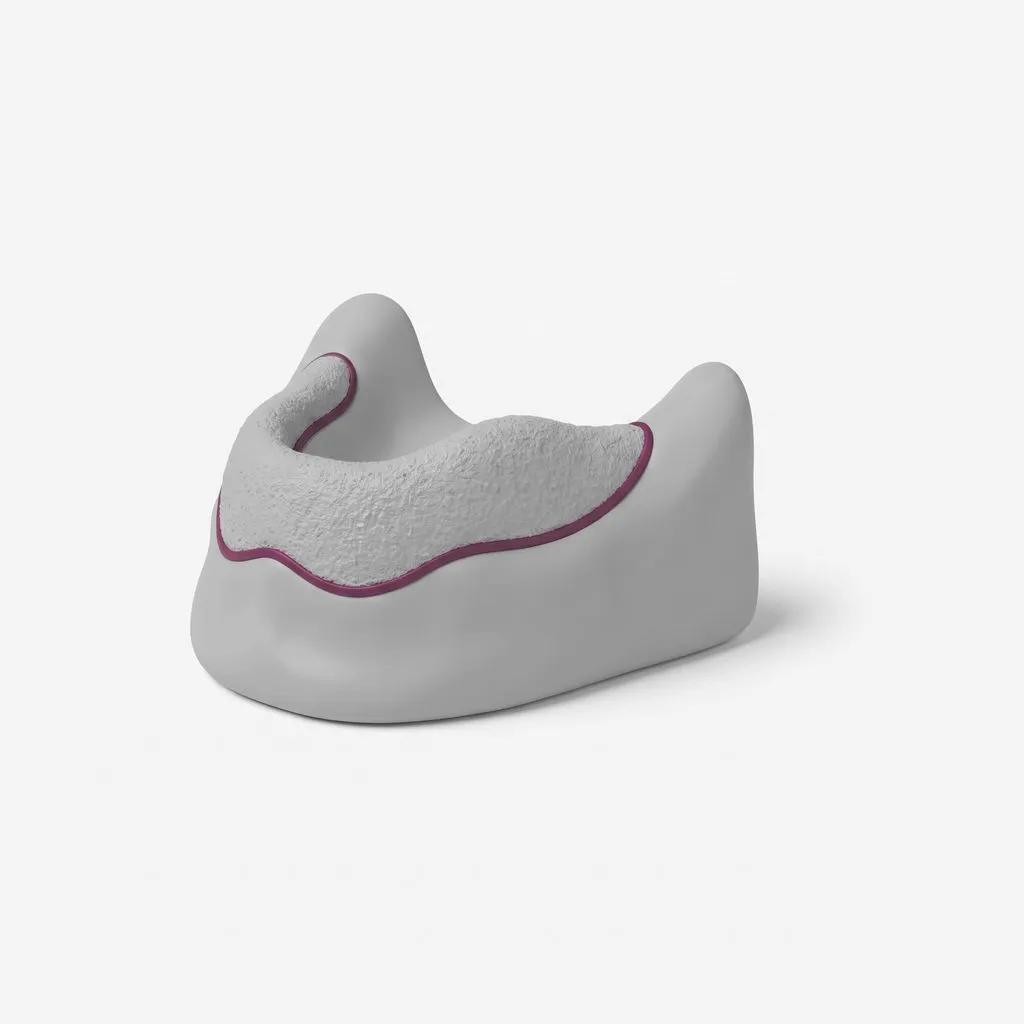
If the jaw has become narrow, it is built up from the side: grafting material is placed on the ridge and secured with a membrane, beneath which new bone grows. This is the most common situation with single gaps.
Sinus lift – height in the posterior upper jaw
In the posterior upper jaw the maxillary sinus often sits so low that too little height remains for an implant. In a sinus lift the lining of the sinus is carefully raised and the space created beneath it filled with grafting material. Where the need is small this is done internally, through the implant bed itself – a minor step. Where it is greater, through a lateral window.
Block augmentation – for extensive defects
For larger defects a block of bone is used and fixed with screws. This is the most involved technique and is needed far less often today than it once was, because particulate methods are sufficient in many cases.
Where the material comes from
Four sources are available, and they are frequently combined:
- Your own bone from the surgical site or the lower jaw is still regarded as the reference, because it contains living cells.
- Bovine bone substitute is highly purified material of bovine origin. It serves as a scaffold that the body slowly remodels. It is the best documented material there is.
- Synthetic materials based on calcium phosphate contain no animal components at all.
- Your own blood (PRF) supplies no volume but growth factors from your own blood, which are mixed into the graft and support healing.
Which material is right for you is something we discuss beforehand – including where religious or personal reasons rule out materials of animal origin. For that case there are fully equivalent synthetic alternatives.
How long it takes
This is the question asked most often in consultations, and the honest answer is: the procedure is short, the healing is not.
| Step | Timeframe |
|---|---|
| The procedure itself | usually 30 to 90 minutes |
| Initial healing, suture removal | around 7 to 10 days |
| Healing before implant placement | about 4 to 9 months, depending on the technique |
| Healing of the implant afterwards | a further 3 to 6 months |
A small internal sinus lift can often be carried out at the same time as implant placement – in which case the first waiting period disappears entirely. Whether that is possible is shown by the 3D scan.
Does it hurt?
The procedure itself does not: it takes place under local anaesthetic, and on request additionally under sedation. Afterwards you should expect swelling, which peaks on the second or third day and then subsides. Most patients manage with a standard painkiller and are able to work again after two to three days – a little later where the work is physically demanding.
What measurably affects healing is smoking. Nicotine impairs the blood supply to the wound area and markedly increases the risk that the graft does not take. A break of two weeks before and after the procedure is the single most effective thing you can contribute yourself.
When it can be done without
Not every tight situation needs a graft. Depending on the findings, the options include:
- Shorter or reduced-diameter implants, where the mechanics allow it.
- Angled placement, which makes better use of the bone that is there – the principle behind All-on-4.
- Mini implants to stabilise a denture.
- A bridge instead of an implant, where the neighbouring teeth need crowning anyway.
Which route is the right one can only be said responsibly after a three-dimensional scan. A 2D X-ray shows height but not width – and here it is often the width that decides.
What makes the planning reliable
The basis of every augmentation with us is 3D diagnostics by CBCT. It shows the available bone to the millimetre in every plane, makes the course of the mandibular nerve and the extent of the maxillary sinus visible, and allows the graft to be matched precisely to the implant that will follow. On that basis we plan the implant position digitally and, where needed, place it guided by a surgical template.
Frequently asked questions
Can a bone graft fail? Rarely, but it does happen. Success rates for established techniques are high. If a graft does not take as planned, it can as a rule be repeated – usually after a healing break.
Does health insurance cover the cost? Statutory health insurers cover implants and augmentations only in narrowly defined exceptional cases. Private insurers frequently reimburse a proportion, depending on the policy. Before treatment begins you receive a written treatment and cost plan from us that you can submit to your insurer.
I have had a gap for years – is it too late? No. Bone can be rebuilt even after a long time. The effort is usually greater than immediately after the extraction, but the result is well predictable.
Do I have to stay in hospital for the graft? No. All the procedures described here are carried out on an outpatient basis in our practice at Rosenthaler Platz. You go home the same day.
Would you like to know whether you need a graft? Arrange a consultation – we will look at your situation in three dimensions and tell you honestly which routes are open to you, including those without augmentation. You can read more about the procedures on our pages for bone grafting, sinus lift and socket preservation.